You’ve been invited to a job interview in a completely new industry. What do you do?

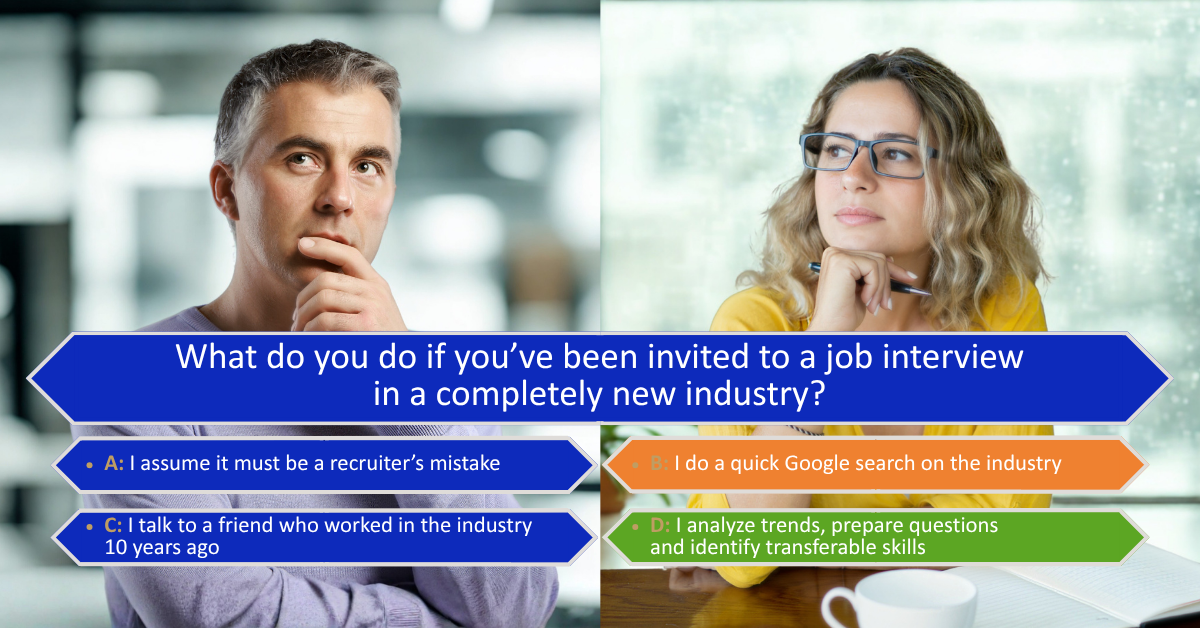
Quiz graphic asking: “What do you do if you’ve been invited to a job interview in a completely new industry?” Four answers are shown: A: “I assume it must be a recruiter’s mistake”; B: “I do a quick Google search on the industry”; C: “I talk to a friend who worked in the industry 10 years ago”; D: “I analyze trends, prepare questions and identify transferable skills.” Option D is highlighted in green as the recommended answer. The background shows a man and a woman in thoughtful poses.

What do you do if you’ve been invited to a job interview in a completely new industry?

“Does my experience even matter in this industry?
How much do I need to know about the sector before the first interview?
Does having no industry experience automatically put me at a disadvantage?
Which of my skills could actually be useful in a new environment?”

Being invited to a job interview in an industry you have never worked in before can quickly raise doubts. Are you really a good fit? Will you be able to have a meaningful conversation about the market? Don’t other candidates have an obvious advantage over you?

For experienced managers and executives, however, changing industries doesn’t have to mean starting everything from scratch. In many roles, what matters is not only sector knowledge but also experience in running a business, leading transformations, scaling organizations, managing P&L, managing change and working with complex stakeholder groups. The key is whether you can apply your existing experience to the needs of the new environment.

Let’s look at the options you have when you’re invited to a job interview in a completely new industry.


1. Assume it must be a recruiter’s mistake Read more →

Dobre CV to nie strategia poszukiwania pracy: czego naprawdę potrzebują doświadczeni managerowie i executives

Grafika Career Angels o strategicznym poszukiwaniu pracy przez doświadczonych managerów i executives. Mężczyzna w garniturze stoi w nowoczesnym biurze. Tekst: „Dobre CV pomaga Ci się wyróżnić. Ale to strategia przynosi rezultaty”.

Dobre CV to nie strategia poszukiwania pracy: czego naprawdę potrzebują doświadczeni managerowie i executives

Możesz mieć dobrze napisane CV, zoptymalizowany profil na LinkedIn, ustawione alerty o ofertach pracy na wielu platformach oraz korzystać z AI do researchu stanowisk i przygotowywania aplikacji, a mimo to nadal nie mieć strategii poszukiwania pracy.

Ma to szczególne znaczenie w przypadku doświadczonych managerów i executives. Na tym poziomie poszukiwanie pracy rzadko sprowadza się jedynie do znajdowania odpowiednich ofert i wysyłania dobrych aplikacji. Chodzi raczej o określenie, gdzie Twoje doświadczenie może wnieść największą wartość, zidentyfikowanie miejsc, w których takie możliwości mogą się pojawić, oraz wykorzystanie kilku kanałów, aby do nich dotrzeć.

Gary Burnison, CEO Korn Ferry, zwraca uwagę na podobną kwestię w swoim niedawnym artykule „I Need a Job!”. Jego główne przesłanie jest proste: samo przekazanie komuś CV lub przesłanie go do systemów ATS nie wystarczy. Kandydaci potrzebują planu. Read more →

Zaproszono Cię na rozmowę kwalifikacyjną w zupełnie nowej branży. Co robisz?

Grafika z pytaniem: „Co robisz, jeśli zaproszono Cię na rozmowę kwalifikacyjną w zupełnie nowej branży?” Odpowiedzi: A. Zakładam, że to musi być błąd rekrutera. B. Robię szybki research w Google o branży. C. Rozmawiam ze znajomym, który pracował w tej branży 10 lat temu. D. Analizuję trendy, przygotowuję pytania i identyfikuję kompetencje transferowalne.

Co robisz, jeśli zaproszono Cię na rozmowę kwalifikacyjną w zupełnie nowej branży?

„Czy moje doświadczenie ma w ogóle znaczenie w tej branży?
Jak dużo muszę wiedzieć o sektorze przed pierwszą rozmową?
Czy brak doświadczenia branżowego automatycznie stawia mnie na przegranej pozycji?
Które z moich kompetencji mogą być naprawdę przydatne w nowym środowisku?”

Zaproszenie na rozmowę kwalifikacyjną w branży, w której nigdy wcześniej nie pracowałeś, może szybko wywołać wątpliwości. Czy naprawdę pasujesz? Czy będziesz w stanie rozmawiać merytorycznie o rynku? Czy inni kandydaci nie mają nad Tobą oczywistej przewagi?

Dla doświadczonych managerów i executives zmiana branży nie musi jednak oznaczać zaczynania wszystkiego od zera. W wielu rolach liczy się nie tylko wiedza sektorowa, ale też doświadczenie w prowadzeniu biznesu, transformacji, skalowaniu organizacji, zarządzaniu P&L, zmianą oraz współpracy ze złożonymi grupami interesariuszy. Kluczowe jest to, czy potrafisz przełożyć swoje dotychczasowe doświadczenie na potrzeby nowego środowiska.

Przyjrzyjmy się opcjom, jakie masz, gdy zostajesz zaproszony na rozmowę kwalifikacyjną w zupełnie nowej branży.

1. Załóż, że to musi być błąd rekrutera

Read more →

A Strong CV Isn’t a Job Search Strategy: What Experienced Managers and Executives Need Instead

Business executive standing in a modern office corridor beside the text: “A strong CV can help you get noticed. A strategy gets you results.”

A strong CV gets attention. A strategy drives results.

You can have a well-written CV, an optimized LinkedIn profile, job alerts set up across multiple platforms and AI helping you research roles and prepare applications, and still not have a job search strategy.

This matters particularly for experienced managers and executives. At this level, a job search is rarely just about finding relevant vacancies and submitting strong applications. It is about defining where your experience creates the most value, identifying where those opportunities may exist and using several channels to reach them. Read more →

Is Your LinkedIn Profile Working for You? 11 Mistakes That Could Be Limiting Your Visibility

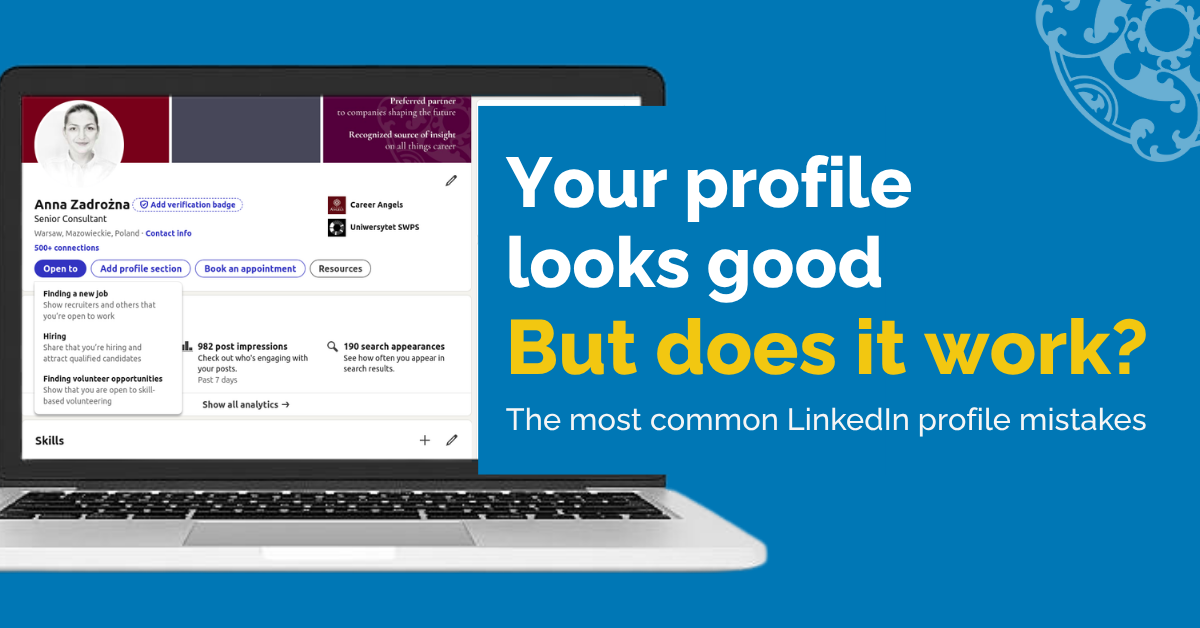
Graphic showing a LinkedIn profile displayed on a laptop next to the headline “Your profile looks good. But does it work?” and the subtitle “The most common LinkedIn profile mistakes.”

Is Your LinkedIn Profile Working for You?

You may have the relevant experience, achievements and qualifications needed to take on your next role. However, if this isn’t clearly evident in your LinkedIn profile, a recruiter, headhunter or decision maker may not find you or recognize the full value of your experience.

LinkedIn has over 1.3 billion users worldwide and remains one of the main tools used by recruiters to search for candidates. Despite this, many profiles of experienced managers and executives are still incomplete, out of date or not optimized for the algorithm.

What are the mistakes we see most often? Read more →

Future-Proof Your Career: Thriving in the Age of AI and Uncertainty

Future-Proof Your Career: Thriving in the Age of AI and Uncertainty, with the subtitle “The world of work will change. The question is whether you will change with it.” Career Angels and Decision Dynamics logos appear at the bottom.

Future-Proof Your Career: Thriving in the Age of AI and Uncertainty

Artificial intelligence is often discussed in extremes. On one side, we hear that AI will replace millions of jobs. On the other, we hear that everyone simply needs to “learn AI” and everything will be fine.

Both views are too simplistic.

The real question is not only whether AI is a threat or an ally. A better question is: under what conditions does AI become a threat, and under what conditions can it become an ally? Read more →

Czy Twój profil na LinkedIn działa? 11 błędów, które mogą ograniczać Twoją widoczność

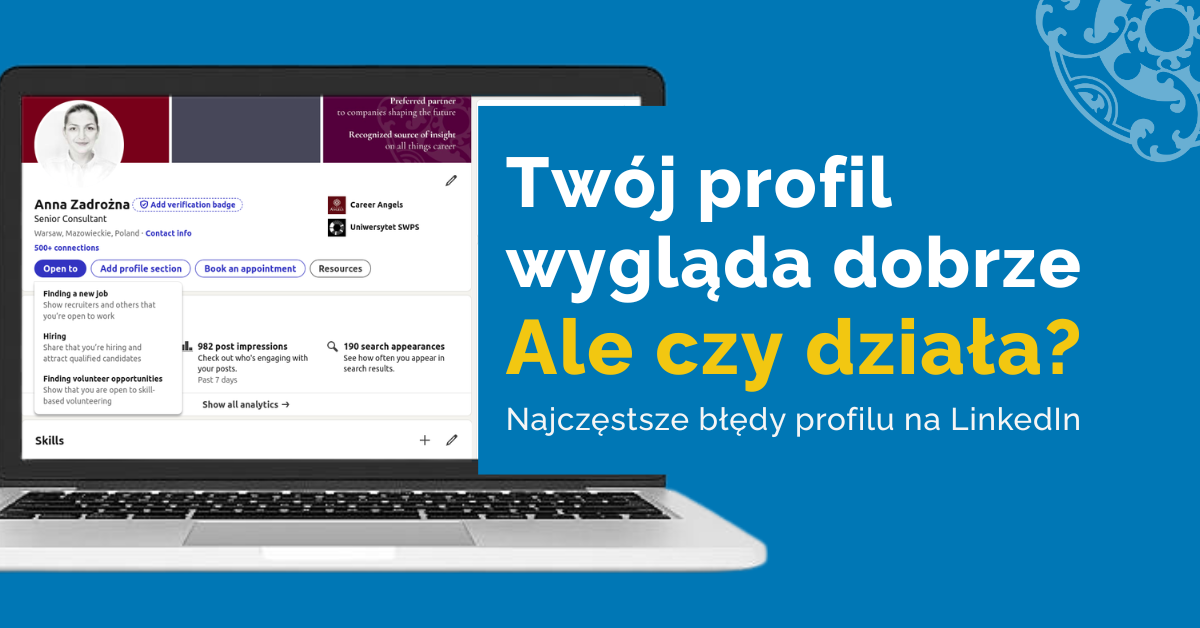
Grafika promująca artykuł o skuteczności profilu na LinkedIn. Po lewej stronie widoczny jest ekran laptopa z przykładowym profilem LinkedIn, a po prawej napis: „Twój profil wygląda dobrze. Ale czy działa? Najczęstsze błędy profilu na LinkedIn”.

Czy Twój profil na LinkedIn działa? 11 błędów, które mogą ograniczać Twoją widoczność

Możesz mieć odpowiednie doświadczenie, osiągnięcia i kwalifikacje potrzebne do objęcia kolejnej roli. Jeżeli jednak nie wynika to jasno z Twojego profilu na LinkedIn, rekruter, headhunter lub decydent może Cię nie znaleźć albo nie dostrzec pełnej wartości Twojego doświadczenia.

LinkedIn ma ponad 1,3 miliarda użytkowników na całym świecie i pozostaje jednym z głównych narzędzi wykorzystywanych przez rekruterów do wyszukiwania kandydatów. Mimo to wiele profili doświadczonych managerów i executives jest nadal niekompletnych, nieaktualnych lub niezoptymalizowanych pod kątem algorytmu.

Jakie błędy widzimy najczęściej? Read more →

#OpenToWork on LinkedIn: Does the Green Frame Help, or Does It Send the Wrong Message?

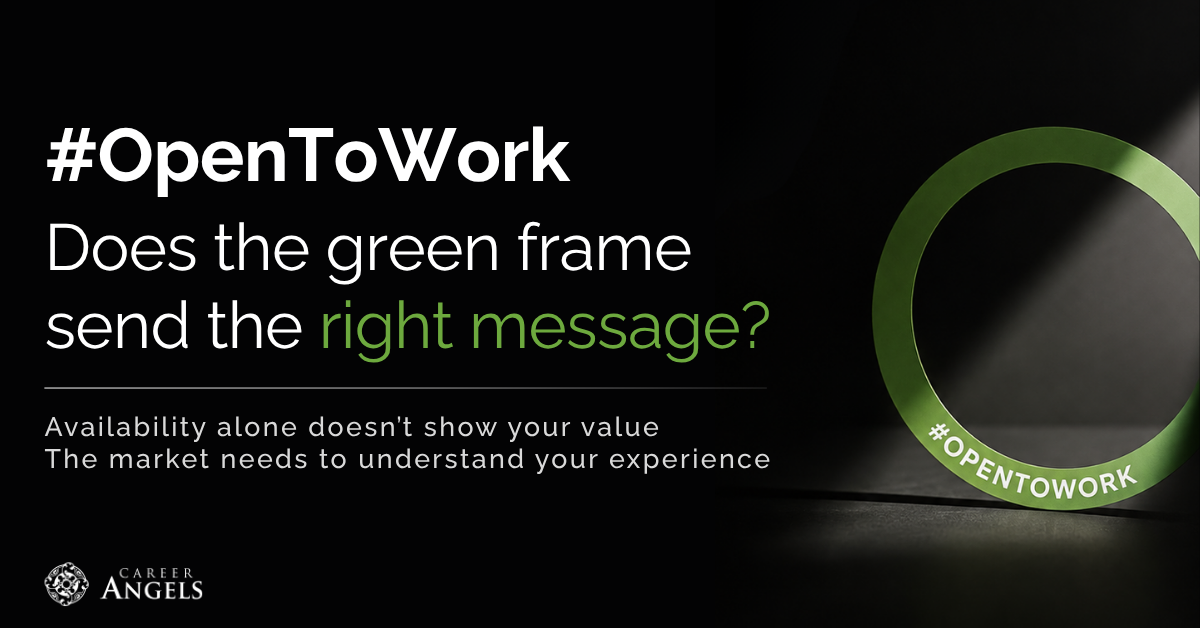
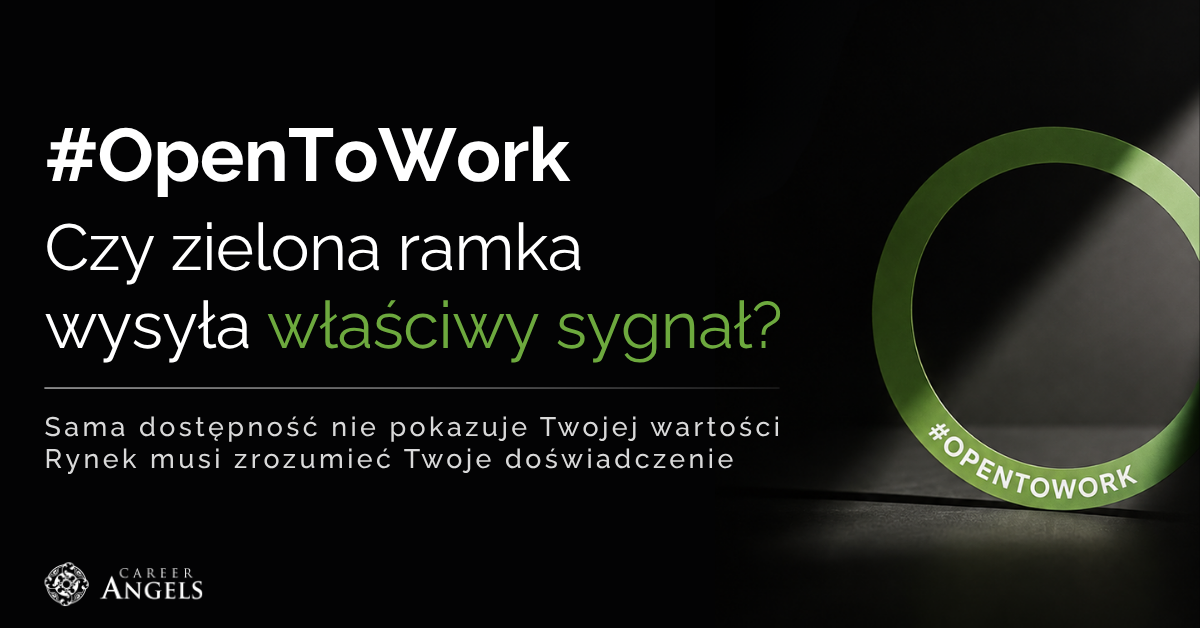
Graphic about LinkedIn’s #OpenToWork feature, asking whether the green profile frame sends the right message. It highlights that availability alone does not communicate a candidate’s value and that the market also needs to understand their experience.

Does the #OpenToWork Frame Help, or Does It Send the Wrong Message?

You may have the relevant experience, significant achievements and the skills required to take on your next role. However, if your way of communicating your openness to new opportunities doesn’t reflect your career stage and circumstances, you may not be making the most of LinkedIn’s potential.

The #OpenToWork feature was introduced by LinkedIn in 2020 to enable users to let others know that they are open to considering new career opportunities. Setting this feature to public adds a green frame to your profile picture, which is visible to other LinkedIn users.

For many job seekers, this may be a useful solution. However, for experienced professionals, managers and executives, it is worth considering whether this is the best way to communicate their professional situation and attract the right opportunities.

Could the Green #OpenToWork Frame Be Sending the Wrong Message?

Read more →

#OpenToWork na LinkedIn: czy zielona ramka pomaga, czy wysyła niewłaściwy sygnał?

Grafika Career Angels z napisem „#OpenToWork. Czy zielona ramka wysyła właściwy sygnał?” oraz zieloną ramką #OpenToWork na czarnym tle. Tekst podkreśla, że sama dostępność nie pokazuje wartości kandydata i że rynek powinien rozumieć jego doświadczenie.

#OpenToWork na LinkedIn: czy zielona ramka wysyła właściwy sygnał?

Możesz mieć odpowiednie doświadczenie, znaczące osiągnięcia i kompetencje potrzebne do objęcia kolejnej roli. Jeżeli jednak sposób, w jaki komunikujesz swoją dostępność zawodową, nie jest dopasowany do Twojego poziomu kariery i sytuacji, możesz nie wykorzystać w pełni możliwości LinkedIn.

Funkcja #OpenToWork została wprowadzona przez LinkedIn w 2020 roku, aby umożliwić użytkownikom poinformowanie innych osób o gotowości do rozważenia nowych możliwości zawodowych. Publiczne ustawienie tej funkcji dodaje zieloną ramkę do zdjęcia profilowego, widoczną dla innych użytkowników LinkedIn.

Dla wielu osób poszukujących pracy może być to użyteczne rozwiązanie. Jednak w przypadku doświadczonych profesjonalistów, managerów i executives warto zastanowić się, czy jest to najlepszy sposób komunikowania swojej sytuacji zawodowej i przyciągania odpowiednich możliwości.

Czy zielona ramka #OpenToWork może wysyłać niewłaściwy sygnał?

Read more →

Why Do One-Size-Fits-All Employee Development and Retention Initiatives Fail?

Manager discussing employee motivation, development and retention with an employee during a one-to-one meeting.

Why Do One-Size-Fits-All Employee Development and Retention Initiatives Fail?

A pay rise, promotion, training, greater autonomy or a change in the scope of responsibilities can increase motivation and help retain a valuable employee. However, this doesn’t mean that each of these solutions will be equally effective for different people.

Market data also points to differences in employees’ priorities. According to the Randstad Employer Brand Research 2026 report, the importance of individual factors changes depending on the stage of one’s career. Job security is cited by 59% of Generation Z employees, and around 73% of Generation X employees and Baby Boomers. The importance of salaries rises from 53% among Generation Z to around 67% among older groups. Younger employees, on the other hand, are more likely to associate a sense of security with opportunities for learning and development.

The data show differences between groups of employees, but don’t allow us to determine what a specific individual needs. Read more →